
Feadship has secured exclusive rights to apply AtomicOne’s MXBuster combustion optimisation technology to yachts over 30 metres following more than a year of operation aboard an existing Feadship vessel.
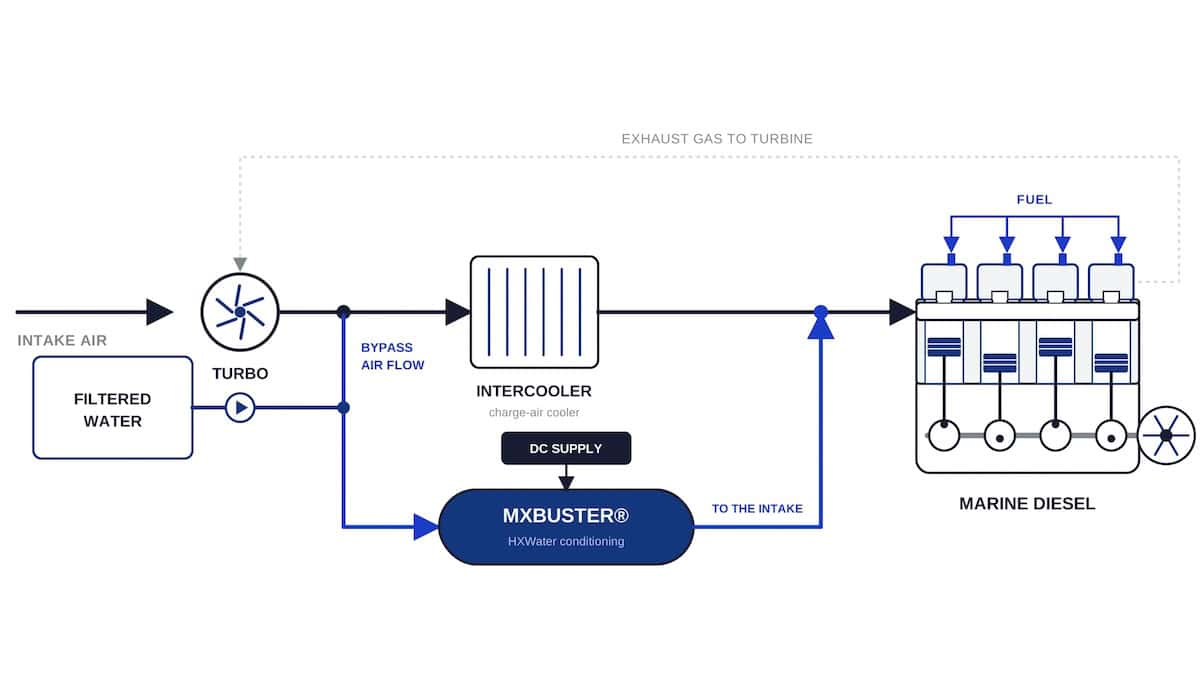
The system is designed to reduce emissions and fuel use by improving combustion at the engine intake rather than treating exhaust gases after combustion.
Hydrogen generated from purified water and conditioned water vapour is introduced into the intake air, with the aim of reducing soot, nitrogen oxides, particulate matter and exhaust temperatures.
Independent testing and certification organisations, including Lloyd’s Register and SGS, have assessed MXBuster on medium-speed shipping engines and superyacht generator sets. Reported results include nitrogen oxide reductions of up to 55%.
Potential fuel savings
The first Feadship installation has operated for more than a year. Feadship says soot deposits were eliminated and emissions fell during the trial, while initial onboard measurements indicated potential fuel savings.
Separate testing on modern land-based diesel engines recorded fuel-consumption reductions of up to 14% and AdBlue savings of 25–35%.
MXBuster is installed as a separate add-on, requiring no changes to the engine itself, and can be used with diesel or HVO. Lloyd’s Register has approved the technology for installation without altering the engine’s certified configuration.
Compact installation
“What makes MXBuster particularly interesting is that it has relevance for both existing and future yachts,” said Mattes Kruize, director of new business and supply chain at Feadship.
“For many yachts with Tier II engines, conventional solutions for reducing emissions require considerable space and modifications to the engine room.”
He added that the compact installation could provide another option for existing yachts and influence future engine-room design.
Feadship, AtomicOne, Eindhoven University of Technology and specialist maritime partners are also working on the Machine Room of the Future programme.
The project combines combustion optimisation with compact exhaust after-treatment, aiming to reduce the space, weight and complexity of conventional emissions systems.