
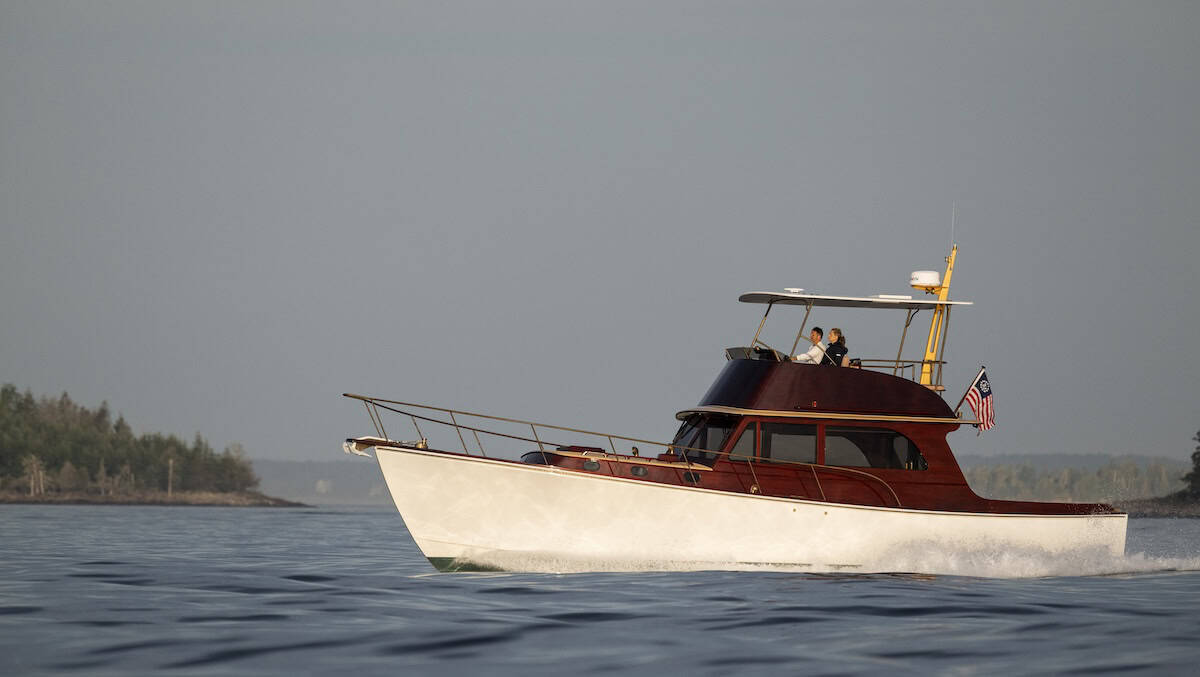
Lyman-Morse Boatbuilding has unveiled the first hull of its new Hood 42 LM, continuing its collaboration with C.W. Hood Yacht Design.
The Hood 42 LM is the latest in the Hood Series by Lyman-Morse, which has seen the boatbuilder also produce versions of 35ft LOA and a 57ft flybridge motor yacht, with a new 46ft version currently under construction.
The yacht carries a profile that is inspired by the classic designs that have graced America’s New England region for generations, with features including a graceful sheer, varnished mahogany house sides, bronze bow rail, incorporated with modern engineering.
“Once in a while, a project comes along that inspires every single person in our company,” said Drew Lyman, president of Lyman-Morse.
“The 42’s owner brought an extraordinary vision, and our team embraced each opportunity.
“The result is a yacht that reflects the collective talents of our engineers, cabinetmakers, machinists and finish craftsmen.”
Hideaway electronics console
The yacht is constructed using Lyman-Morse’s cold-molded composite process, and combines Douglas Fir and Western Red Cedar with advanced composite laminates to create a structure that is strong, light, and quiet underway.
The 42 is powered using twin Volvo Penta 440hp engines with DPS, giving a cruising speed in the mid-30-knot range.
Hull No. 1 features a single-owner stateroom forward with stowage, enclosed head and a separate shower stall.
The main deck is arranged as an open, single-level living space that integrates the helm to port, galley, salon, and entertaining areas.
Features include a hideaway electronics console at the lower helm and custom-forged bronze fittings designed to secure fenders.
A carbon-fibre companionway door is wrapped in varnished veneers with a counter-balanced drop window and screen.
The salon side and aft windows are lowered and raised electrically, and a spruce and teak ladder from the cockpit to the flybridge is shaped for both easy access and to complement the exterior profile.
“They’re details that don’t exist because they’re easy,” said Drew. “They exist because someone cared enough to ask whether we could build them better.”