

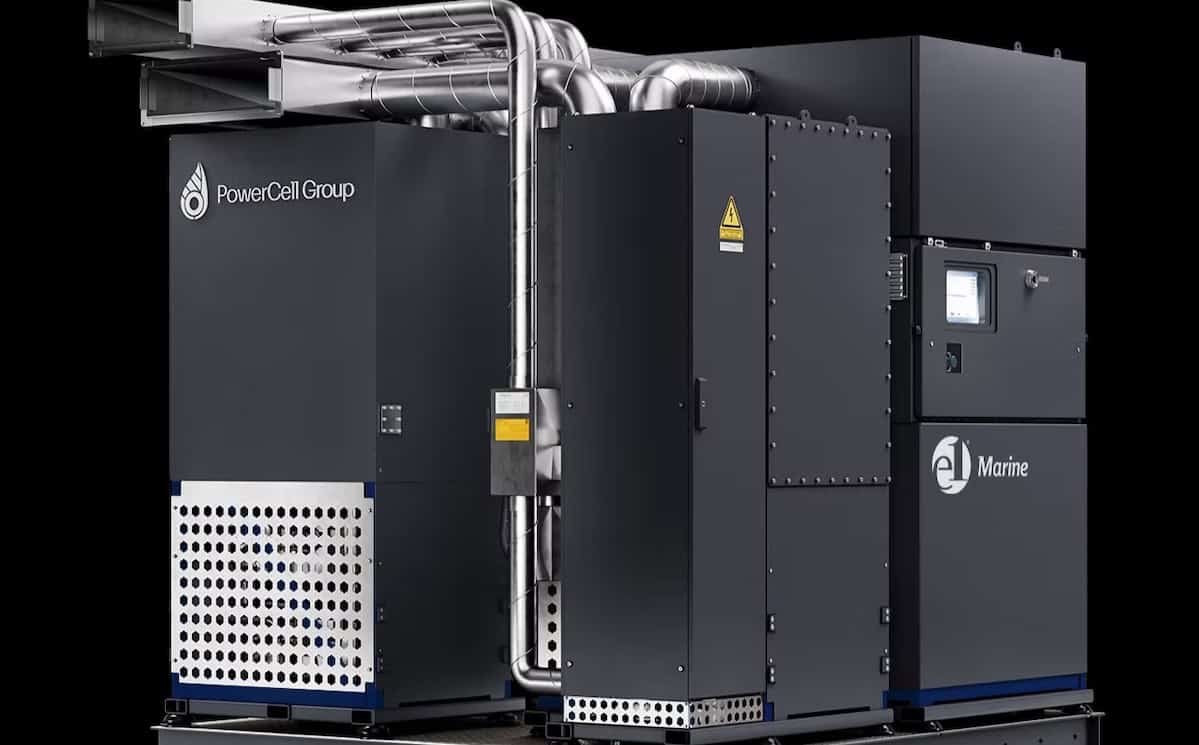
e1 Marine, developer of advanced hydrogen generation technology, is to supply its methanol-to-hydrogen reformer technology as part of a retrofit programme for a luxury yacht.
The installation, rated at 0.5 MW, will support PowerCell Group’s M2Power 250 system, and continues to advance e1 Marine’s expansion in the leisure marine sector.
The announcement forms part of PowerCell’s 43 million SEK (approximately US$4.7 million) order for its M2Power 250 methanol-to-power platform from a European shipyard.
The project builds on the ongoing collaboration between e1 Marine and PowerCell to deliver fully integrated reformer-fuel-cell solutions for maritime applications through the M2Power 250 system.
Larger yacht builders are increasingly looking for practical ways to cut emissions.
Dave Lee
Each 250kW module integrates e1 Marine’s M30 methanol-to-hydrogen reformer with PowerCell’s marine fuel cells to generate hydrogen on demand for clean electrical power.
The installation is designed to replace traditional marine diesel gensets and eliminates the need for compressed hydrogen storage.
“This project represents an important milestone for e1 Marine, building on our earlier collaboration with PowerCell and marking our second commercial project supporting the marine leisure and superyacht markets,” explained Dave Lee, executive director, e1 Marine.
“Larger yacht builders are increasingly looking for practical ways to cut emissions and improve onboard environmental performance without compromising reliability, range, or sailing experience.”
Methanol-to-power platform
An he explained that e1 Marine’s technology will generate fuel cell-grade hydrogen (≥99.97% purity, ISO 14687 compliant) onboard from a methanol-and-water feedstock blend for direct use in fuel cells.
Water and heat are produced as by-products, with the latter offering potential for recovery and onboard use where appropriate.
“The order confirms market interest in our methanol-to-power platform,” said Richard Berkling, CEO, PowerCell Group.
“The M2Power 250 offers shipowners a practical way to reduce emissions in existing vessels and supports the accelerating shift toward cleaner auxiliary and propulsion power.”
The project is part of a retrofit programme, with delivery planned for 2027.