
CMC Marine and Dometic have unveiled an integrated stabilisation system that combines stabiliser fins with active gyroscopes, reporting roll reductions of up to 94% in sea trials.
The solution was presented at Metstrade 2026. The companies describe it as ‘the industry’s first advanced integration of stabiliser fins and active gyroscopes’.
Trials were carried out in Athens between the summer and October aboard a Princess 62 Flybridge bought jointly by the two companies.
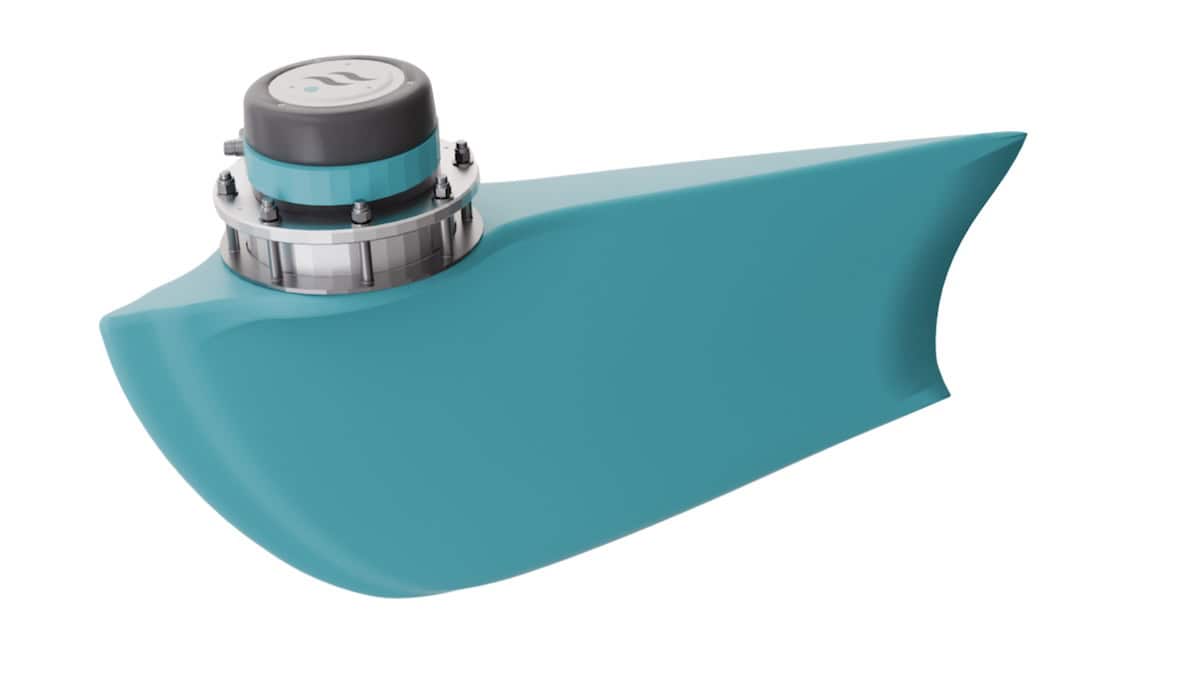
The boat was fitted with CMC Marine STAB 25 stabiliser fins and two Dometic DG3 active gyroscopes.
Unlike a passive gyroscope, which reacts to the vessel’s motion, an active gyroscope directly controls precession, the movement that generates the force opposing roll.
The companies say this gives a faster response and less resistance.
Range and energy of motion
Performance was measured using root mean square (RMS) roll values, which reflect the full range and energy of motion rather than peak or average figures.
In moderate seas with 0.5m waves at zero speed, fins combined with one DG3 gyro achieved an 83% reduction.
With two gyros, the reduction reached 94%. In 1m waves at zero speed, fins with one gyro achieved 70%.
The fins remain most effective underway, where they can cut roll by more than 80% and cope with bigger seas.
Gyros contribute most at anchor, at very low speeds and in shorter waves. The companies say combining both delivers comfort when cruising and when stationary.
They also report a smaller footprint. Matching these results with a conventional passive gyro alone would, they say, require substantially larger and heavier units.
The pairing also provides redundancy through two independent systems.
Distribution and sales
The Dometic gyro is DC powered, with a dedicated battery for spooling up that recharges during spooling down. The companies say it can run silently overnight without a generator.
Under the partnership, CMC Marine will lead distribution of the fins-and-gyro package in EMEA, while Dometic will lead sales in the rest of the world.
Future development could include software integration, operation through a single interface and coordinated control strategies that optimise performance automatically.
The companies call the combination ‘a new frontier in marine stabilisation’, with potential applications across a wide range of vessel sizes.