

Interview – ExploMar CEO Alex Dong
The innovative Chinese-based technology company ExploMar was founded in 2021 to focus on the development and application of high-performance electric outboard systems for marine mobility.
Committed to accelerating the electrification and intelligent transformation of global water transportation, ExploMar has certainly not stood still over the last five years, with more than 100 patents independently developed and secured, a raft of new products both launched and in development and a growing global market.
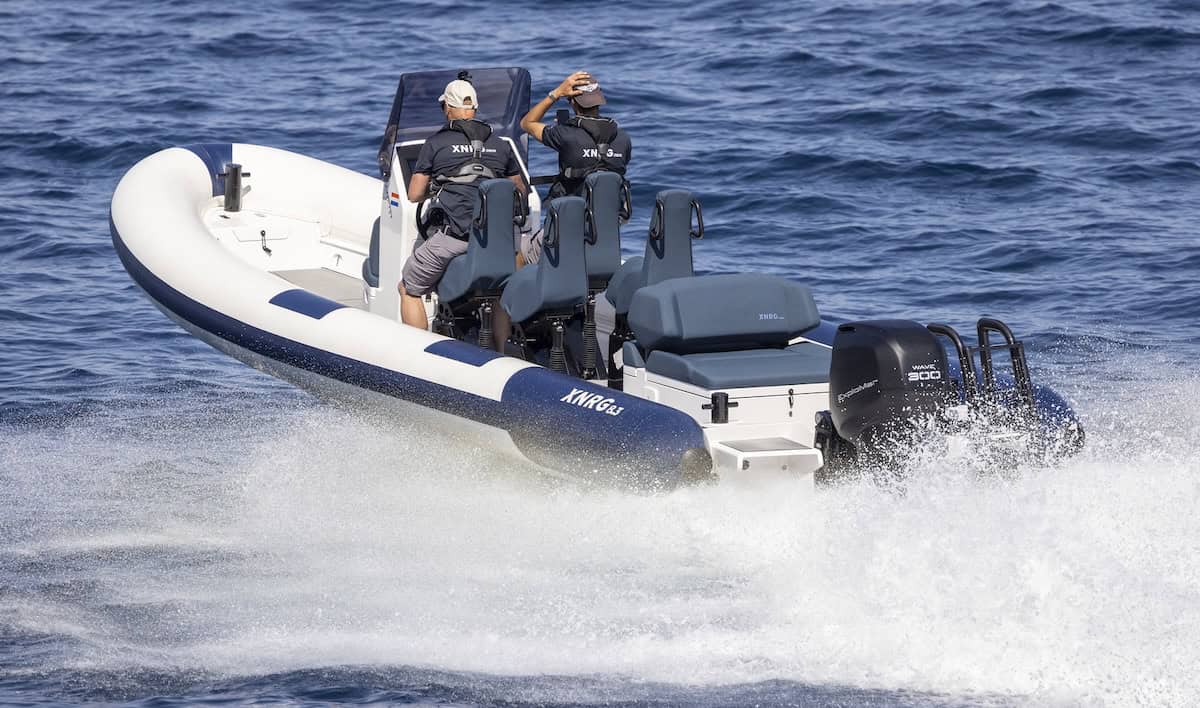
The company’s product portfolio currently covers propulsion solutions ranging from 70hp to 1,200hp, serving boats from 3 to 25 metres in length with recent achievements including powering the 8.3m XNRG carbon-fibre RIB to victory in the 16-nautical-mile Endurance Challenge and securing second place in the Speed Record in the Open Sea Class at the Monaco Energy Boat Challenge.
Guided by a fully electrified technology approach with the desire to enable users to enjoy a more sustainable and enjoyable boating experience, the company has introduced its WAVE series of high-performance electric outboards, the SuperIsland high-performance marine battery platform, and its Smart Captain intelligent boating system.
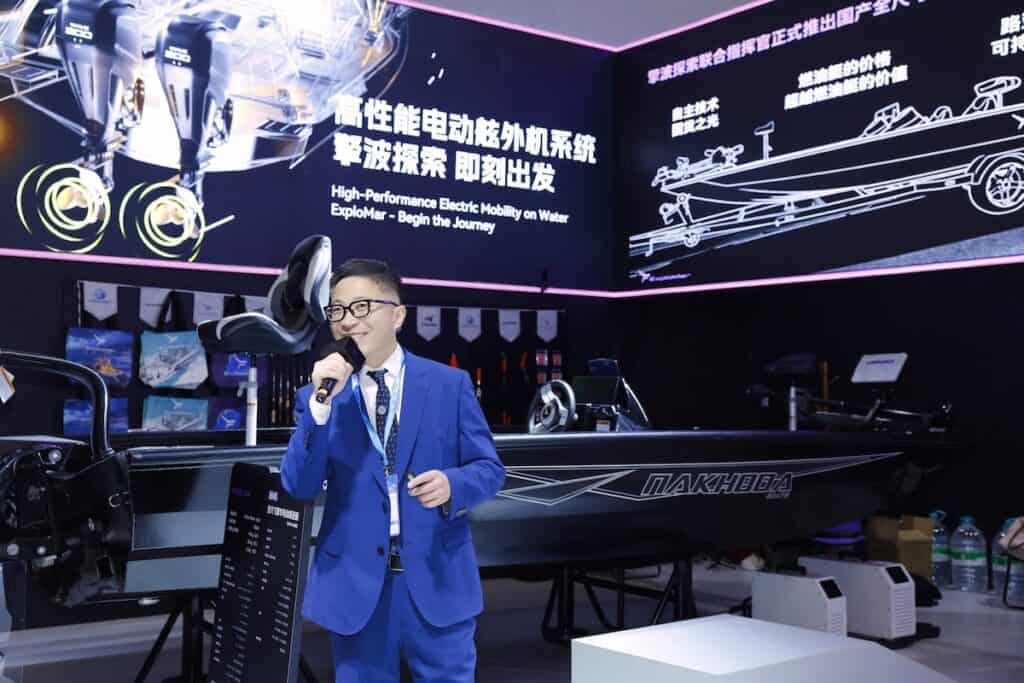
In addition, ExploMar also provides a modular ‘skateboard chassis’ propulsion architecture for boats, featuring complete system integration, modular installation, strong compatibility, and high adaptability.
ExploMar has also developed a 5S Energy Station, a microgrid solution integrating solar generation, energy storage, and charging infrastructure, creating a zero-carbon ecosystem that spans both propulsion and energy replenishment for water mobility.
In this exclusive interview with ExploMar CEO, Alex Dong, we discuss his views on the adoption of alternative fuel technologies and the company’s processes as it develops its products from prototype testing to volume orders.
Firstly, how would you assess the current stage of development of the global electric boating industry?
I believe the global electric boating industry is currently moving from the stage of ‘early experimentation’ to ‘market validation’.
Several years ago, many new entrants and technologies emerged, with the industry largely focused on proof of concept and early adoption.
Today, customers are making decisions based on real operating scenarios. Their priorities have shifted toward reliability, operating costs, and commercial viability.
The industry is therefore moving away from the question of ‘Can it work?’ toward ‘Who can deliver reliable and scalable solutions?’
As this transition continues, solutions that cannot meet demanding commercial requirements will gradually disappear, while companies with mature products, integrated systems, and strong service capabilities will enter a more sustainable growth phase.
What factors will do you think will encourage more consumers to adopt electric propulsion?
The drivers of adoption are evolving from environmental considerations toward a broader value proposition.
First is performance and user experience. As electric propulsion continues improving in power delivery, range stability, and handling, customers increasingly recognise that electric boating offers a quieter, smoother, and more intelligent experience.
Second is economic value. Electric systems are mechanically simpler, require less maintenance, and reduce long-term operating uncertainty, particularly during periods of fuel price volatility.
Third is infrastructure development. As sea trial networks, charging facilities, and energy infrastructure continue expanding, customer confidence grows and barriers to adoption decrease.
Finally, application scenarios are expanding beyond recreational boating into tourism, workboats, aquaculture, patrol operations, and commercial fleets. These real-world applications further accelerate market acceptance.
When performance, economics, experience, and infrastructure mature together, choosing electric propulsion becomes a natural business and lifestyle decision.
Which application segments are most likely to achieve large-scale electrification first?
The first sectors to achieve large-scale electrification will likely be those with strong requirements for operational efficiency and cost control.
Fleet operations — including tourism vessels, harbor shuttles, and inland waterway vessels — are particularly suitable because they involve frequent operation, fixed routes, and centralised management.
By combining electric propulsion with Smart Fleet capabilities, operators can monitor vessel locations, operating status, and performance data in real time, improving efficiency while reducing operating costs.
Tourism and leisure applications, such as lake cruises and waterfront attractions, are also strong candidates because quiet operation and environmental performance directly enhance the customer experience.
Additionally, workboats and aquaculture vessels operating in enclosed or semi-enclosed waters are well suited for electrification due to predictable routes, manageable charging requirements, and strong sensitivity to operating costs.
Applications characterised by high utilisation, centralised management, cost sensitivity, and operational control are likely to lead the transition, with fleet operations representing one of the most important opportunities.
Over the past few years, what key breakthroughs has ExploMar achieved in performance, intelligence, and reliability?
In terms of performance, we have established a complete portfolio of high-performance electric outboards, including the WAVE 300 (300hp peak power), WAVE 150+ (200hp peak power), and WAVE 70+ (100hp peak power).
These products have been successfully validated on RIBs, workboats, patrol vessels, government boats, and tourism vessels, demonstrating stable and reliable power delivery across various operating conditions.
In terms of intelligence, we introduced the Smart Captain system, making boat operation more intuitive and easier. For example, in narrow waterways or complex operating environments, users can perform advanced maneuvers such as trimming and turning through one-touch operation, significantly reducing the learning curve.
Meanwhile, Smart Fleet provides substantial value for commercial operators. Through remote monitoring capabilities, operators can track vessel locations and operating conditions in real time, enabling more efficient fleet management and scheduling.
These breakthroughs not only improve product performance, but also transform electric boats from simple propulsion alternatives into intelligent marine operating platforms.
From your initial entry into international markets to securing volume orders today, how has global customer perception of Chinese electric outboard technology changed?
Today, electric propulsion has evolved from an interesting new technology into a practical business decision for many customers – this shift in perception is one of the most important changes we have observed in global markets.
When customers first encountered ExploMar, many still viewed electric outboards as a technology of the future. Many regarded both us and other companies as ‘future brands’ and their primary concern was whether electric propulsion could truly satisfy real-world operating requirements.
However, once customers experienced our products first-hand, their perception changed significantly. They discovered that high performance, continuous power delivery, and long-term operating cost savings are not simply concepts — they are real and measurable benefits.
Across the world, ExploMar’s global business is expanding rapidly. How would you describe the company’s current stage of development?
I believe ExploMar is transitioning from product validation stage into a new phase of global commercialisation.
Over the past few years, our primary focus has been on validating our technology and proving that electric outboards can truly satisfy customer requirements for performance, reliability, and real-world operation. Today, we are seeing this technical validation translate into commercial success.
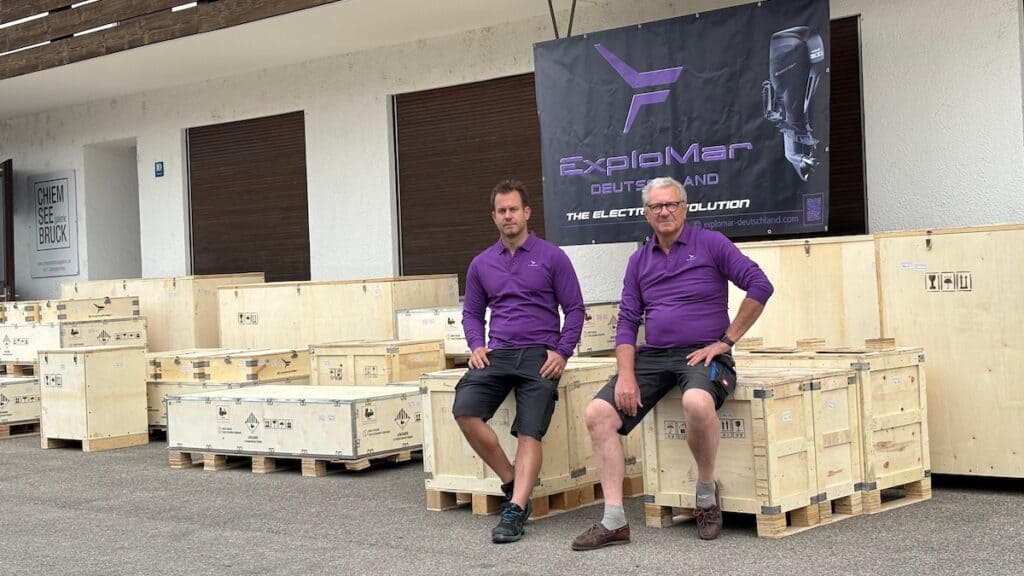
Product deliveries have been completed in many countries including Germany, Poland, Hungary, Peru, Chile, Thailand, with some regions already generating volume orders and recurring demand. This indicates that customers are no longer purchasing a new technology — instead they are investing in a solution that creates long-term value.
At the same time, our focus is evolving and expanding beyond individual products toward complete marine electric ecosystems. In addition to launching intelligent features such as Smart Captain, we’re building global sea trial centres and local service networks so that more customers can experience electric propulsion first-hand.
More importantly, we are advancing the deployment of our 5S Energy Station. By integrating solar generation, energy storage, and charging infrastructure, the 5S Energy Station not only addresses marine charging needs but also provides new possibilities for future marinas and waterfront infrastructure.
And we’re not resting on our laurels. Our long-term goal is not simply to increase market share, but to establish a sustainable global business ecosystem that accelerates the electrification, intelligence, and sustainability of water transportation.
What do you believe are the key factors that have enabled ExploMar to establish a strong presence in the European market within such a short period of time?
Many major lakes and inland waterways in Europe have implemented emission restrictions – with more to follow – and this is a significant factor in the adoption of electric propulsion.
At the same time, we have seen a trend whereby users are increasingly demanding solutions that combine high performance with sustainability.
For example, one market where we see this trend is in high-utilisation applications such as aquaculture vessels and workboats, where electrification can significantly reduce operating costs while minimising the impact of fuel price fluctuations, making it an attractive commercial choice.
We have found that many customers previously experimented with electric products, but the earlier solutions from other companies didn’t deliver the required performance and endurance. ExploMar addresses this challenge by providing the benefits of electrification while also delivering the power, reliability, and operational capability customers require.
Are there other countries where ExploMar is seeing market growth?
Beyond Europe, we are seeing strong growth opportunities across Southeast Asia, Africa, and parts of South America.
While European growth is primarily driven by environmental regulations and emission restrictions, we are finding that emerging markets have an openness to new technologies and new development models. Many of these regions are seeking sustainable solutions to build smarter cities and modern lifestyles.
For coastal cities, islands, and waterfront communities, water mobility and waterfront economies are still in relatively early stages of development, which creates opportunities for electric boats without the burden of legacy infrastructure.
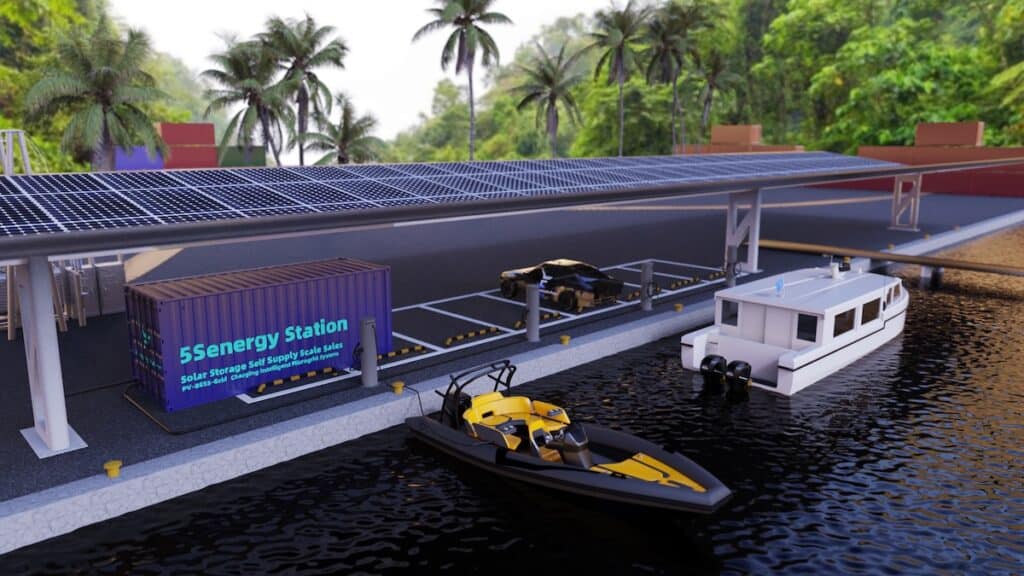
We believe the ecosystem model of ‘marina + energy + water mobility’ will become an important future trend. By combining electric propulsion, intelligent technologies, and 5S Energy Stations, we can support not only vessel electrification but also create new value for future waterfront lifestyles and transportation systems.
Whether for tourism, water transportation, leisure activities, or commercial operations, there’s no doubt that electric propulsion offers a quieter, more efficient, and more sustainable solution.
Looking back at the first half of 2026, what do you consider to be ExploMar’s most significant achievement?
During the first half of 2026, we achieved important progress across three key areas: market expansion, products, and service capabilities.
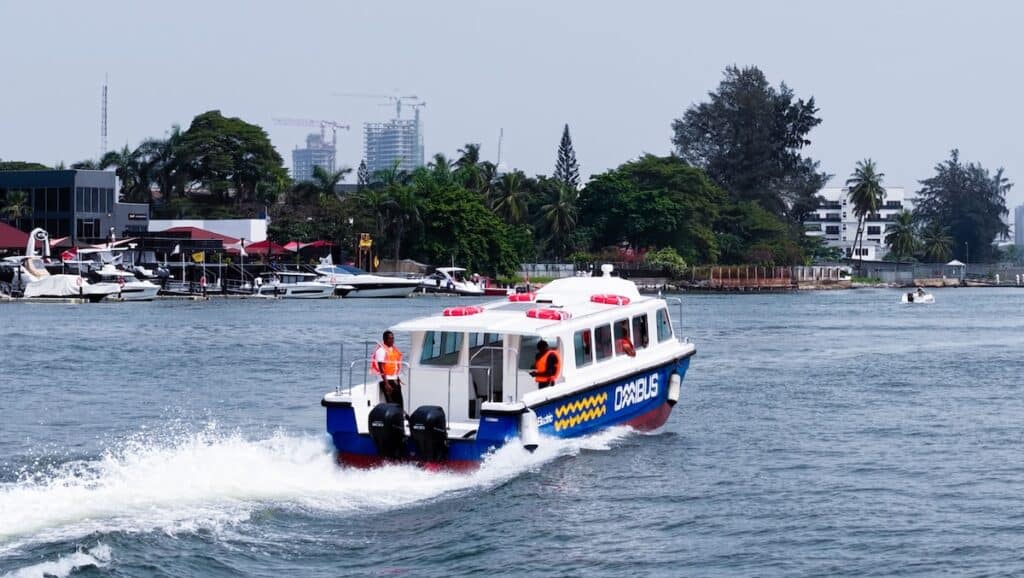
From a market perspective, ExploMar successfully delivered products to Germany, Poland, Hungary, Peru, Chile, Thailand, and beyond. Among these achievements, container-scale deliveries to Germany and commercial fleet deployments in Nigeria were important milestones, indicating that ExploMar’s electric propulsion systems have moved beyond product validation and have entered commercial-scale application.
On the product side, we are preparing to officially launch the Smart Captain intelligent boating system, which deeply integrates electric propulsion with smart technologies. The system will deliver a safer, more intelligent and more convenient boating experience, while enabling functions that conventional combustion engines simply cannot provide.
We believe first-hand experience is one of the most effective ways to build customer confidence in electric propulsion technology so from a service perspective, we are continuing to expand our global sea trial network. So far our sea trial centres in China, Thailand, France, Germany and Hungary are already operating or under development.
These achievements reflect not only ExploMar’s rapid global growth, but also our transformation from a product-driven company into a global organisation with capabilities in products, services, and ecosystem development.
Can you share any insights regarding ExploMar’s product development plans over the next few years?
Over the next few years, ExploMar will focus on four strategic directions.
●The first is continued performance enhancement. We will further optimise power output and energy efficiency to ensure reliable operation and performance in demanding, high-frequency applications.
●The second is deeper intelligence. Building on Smart Captain and Smart Fleet, we will continue improving intelligent driving and fleet management capabilities, making boating easier and operations more efficient.
●The third is battery and energy system advancement. We will continue improving energy density, charging performance, and safety to support larger and longer-range electric vessels.
●Finally, we will accelerate ecosystem development. Centered around the 5S Energy Station, we aim to establish integrated waterfront energy infrastructure that combines solar power generation, energy storage, and charging. These systems will support both electric boats and electric vehicles, gradually creating a comprehensive waterfront mobility and energy ecosystem.
Ultimately, our vision extends beyond product performance alone. We aim to build a complete, sustainable technology and ecosystem platform for the future of water mobility.