

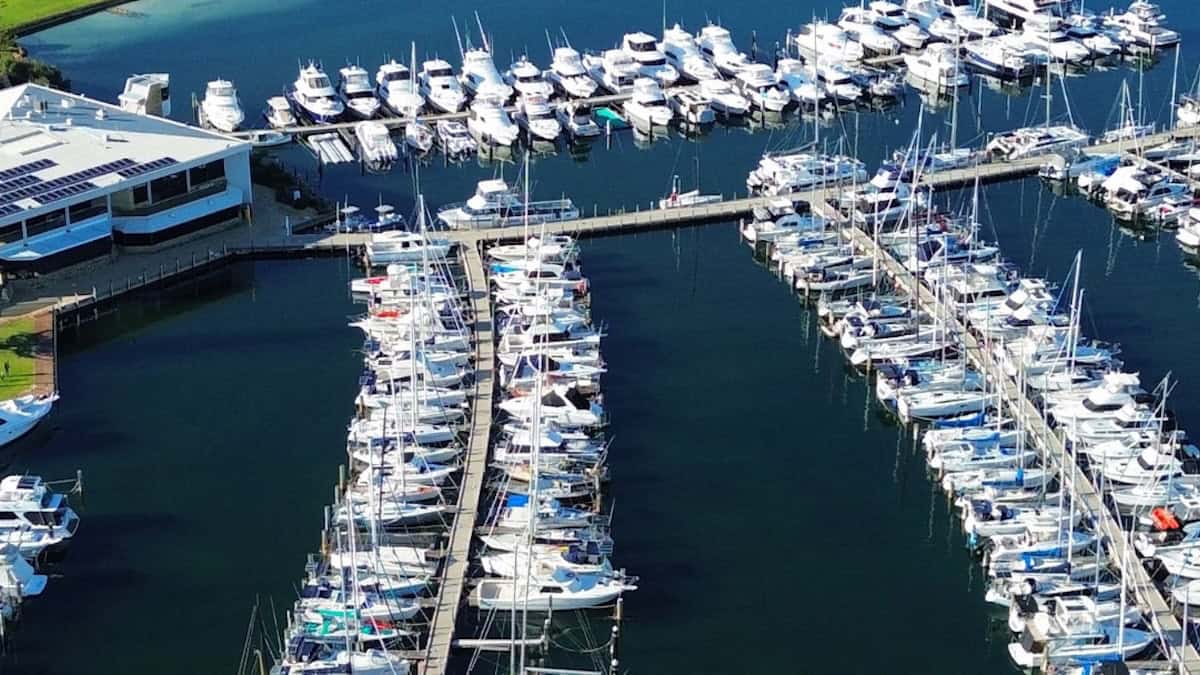
The Australian marina sector is economically robust and confident about the future.
That’s according to the findings of two research projects released by the Marina Industries Association (MIA).
The 2025 Health of the Australian Marina Industry Survey (HAMIS) and the 2026 MIA Employment & Salary Survey was conducted by research partner Michigan State University and found that the marina sector contributes an estimated $3.2 billion to the economy.
Across 305 marinas, the sector supports nearly 24,000 jobs and provides business premises to more than 1,000 small businesses.
Total gross revenues reached $965 million, with $171 million paid in wages and $115 million invested in capital expenditure.
The survey was completed by 40% of Australian marinas and found that the average Australian marina has 188 vessel storage spaces, generates $3.2 million in annual revenue, maintains an 85.4% occupancy rate, employs ten staff and engages 40 contractors. 61% of marinas rent space to an average of eight business tenants.
Workforce pipeline
Environmental stewardship is increasingly on the industry agenda, with 46% of marinas planning to install solar within three years and 75% rating proactive environmental initiatives as highly important.
However, the survey also identified persistent headwinds: labour attraction and retention remain difficult.
Lead Researcher Dr Ed Mahoney warned that bureaucratic delays in permitting and approvals are hampering marina expansion at a time when storage and service capacity is under pressure.
The 2026 MIA Employment & Salary Survey found the industry is growing, but the workforce pipeline is not keeping pace and there is a shortage of trained staff, with marina manager roles remaining hard to fill.
Base line salaries have moderated, however base salaries for key roles have climbed — a reminder that competing for talent has become steadily more expensive.
No respondent forecast a significant reduction in headcount, with a majority expecting to hold steady or grow.
The salary survey was completed by 96 marinas, boatyards and clubs participating across seven states and territories.