

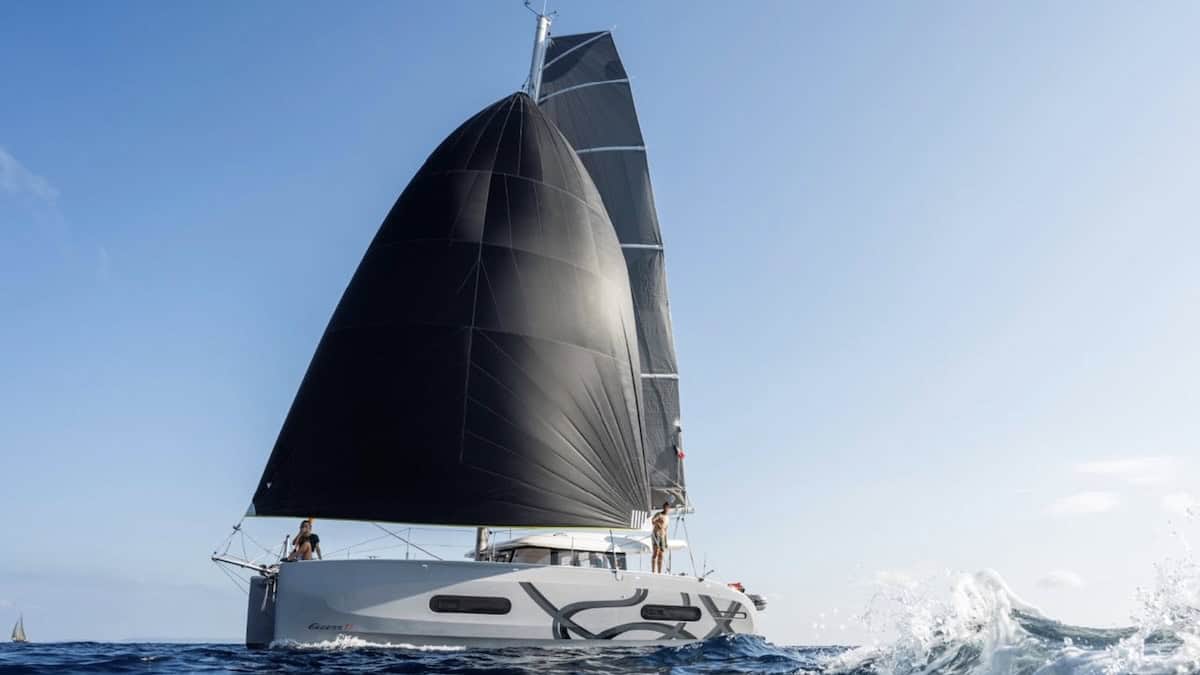
Excess catamarans has marked a new milestone by unveiling an Excess 11 which features among other advancements, Elium recyclable resin and 45% recycled fiberglass.
The development is being hailed by Excess as a concrete technological breakthrough that paves the way for a new generation of more sustainable boats.
“With this project, Excess becomes the first brand to incorporate this combination of innovative materials into a catamaran,” said a spokesperson from Excess.
“A landmark achievement that opens the door to a new generation of catamarans, where technological innovation and recyclability are fully integrated, with no compromise on the performance and reliability standards sailors expect.
“By incorporating 45% recycled fibers alongside Elium resin and a low-carbon resin, Excess is laying the groundwork for a new way of building catamarans.”
Industrial demands of marine construction
The development follows several years of technical collaboration, including with offshore sail racing teams and the Beneteau Group’s innovation teams.
As part of the process, Elium resin has been optimised to meet the industrial demands of marine construction.
Using Pyrolysis technology developed by Composite Recycling, the constituent elements of composite materials – fibreglass and resin – can now be recovered, recycled and reintegrated into new production cycles.
New applications
The alliance bringing together the key industry players of Beneteau Group, of which Excess is a brand, Arkema, Veolia, Composite Recycling, Owens Corning and Chomarat, covering the manufacturing chain from material development and production, composite part manufacturing, waste collection and management, composite recycling and the reintegration of materials into new applications.
“Beyond its performance properties, it offers a concrete answer to one of the industry’s key challenges: managing waste generated during production and at the end of a boat’s life,” added the spokesperson.
“This resin makes production waste recyclable and also enables the deconstruction of composite parts by separating fibres from the matrix.”