

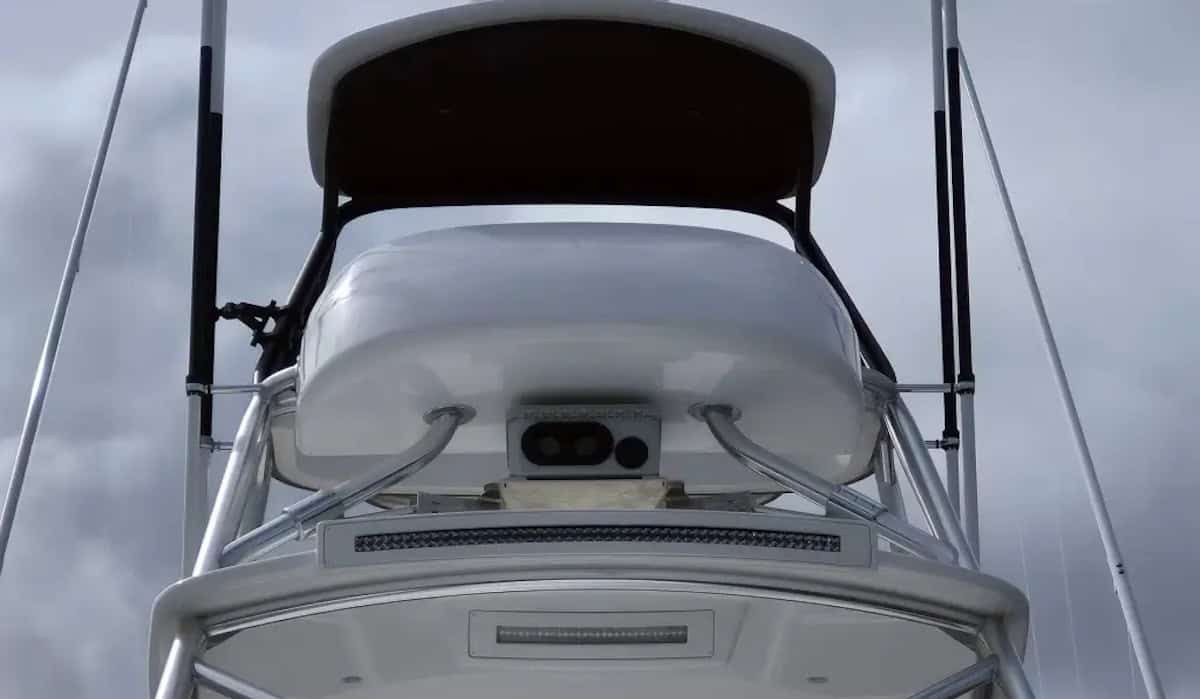
Viking Yacht Company is evaluating an artificial intelligence whale-detection system aboard its new Viking 70 Convertible demonstration boat, marking WhaleSpotter’s first installation on a sportfishing yacht.
The evaluation comes as US regulators consider changes to the 2008 North Atlantic right whale vessel speed rule, which limits most vessels of 65ft or more to 10 knots in designated seasonal areas along the East Coast.
The system combines thermal imaging with AI software to distinguish whales from waves, spray and other surface activity.
WhaleSpotter reports detection at two to three nautical miles, day or night, depending on the height of the camera and the size of the animal.
Small course correction
Atlantic Marine Electronics, a Viking subsidiary, installed the combined thermal camera and processing unit beneath the tuna tower using a removable mount. A tablet at the helm displays thermal images, estimated distance and bearing, while an audible alarm alerts the captain.
“Seeing a whale two or three miles ahead gives a captain time to make a small course correction to avoid it,” explained Shawn Henry, chief executive of WhaleSpotter.
“Captains can identify a potential risk and respond well before the vessel gets close to the whale.”
The equipment gathered data during the yacht’s recent passage from New Jersey to Florida, although no whales were detected.
Whale and Vessel Safety Taskforce
Viking has evaluated vessel-strike avoidance technology since 2022 through its Whale and Vessel Safety Taskforce.
The group operates a 24ft Contender research boat equipped with thermal imaging, radar and AI-based detection systems.
Work in Plymouth, Massachusetts, has included manoeuvring trials and analysis of NMEA vessel data to assess how captains respond to detections.
“We’re seeing tremendous progress in whale-detection technology, and these systems are becoming more practical and accessible for recreational boats,” said John DePersenaire, Viking’s director of government affairs and sustainability.
WhaleSpotter developed from more than a decade of research at Woods Hole Oceanographic Institution.
The company reports more than 70 systems deployed worldwide on commercial vessels and at shore-based monitoring sites.