
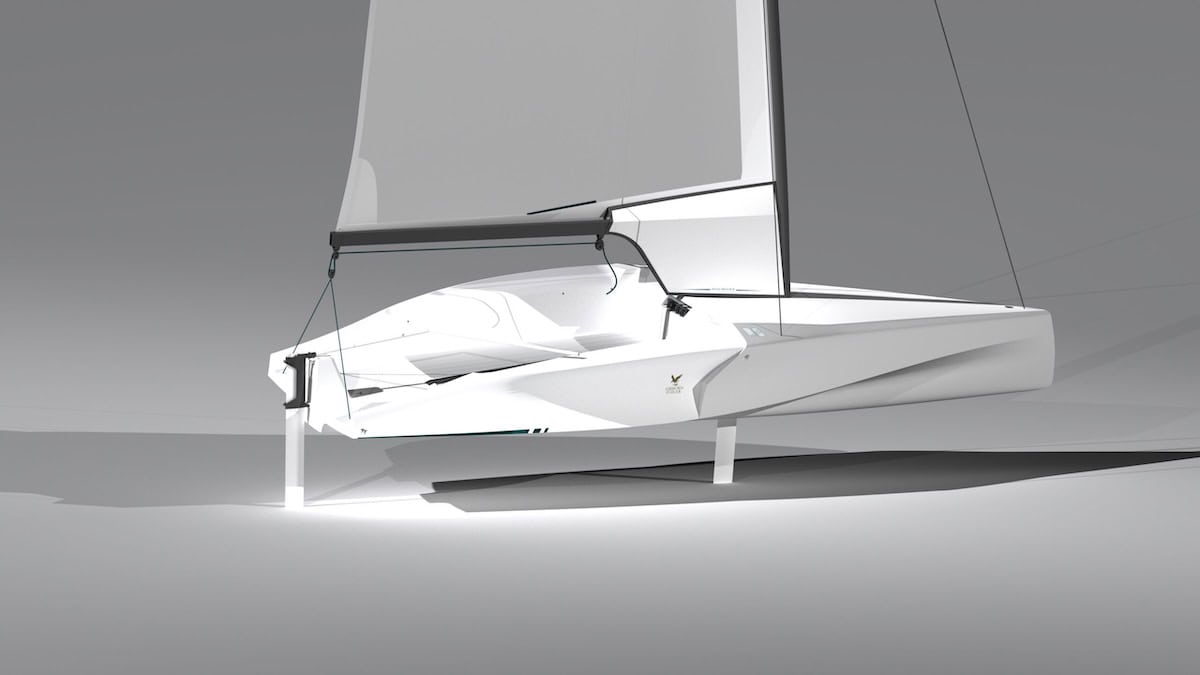
Production is due to start in May 2026 on a new electric foiling dinghy.
The Thomas Tison Airborn Foiler measures 3.9 metres in length and will have a weight of 41kg.
The craft promises electronically stabilised flight in as little as 6 knots of wind, with an optimum window of between 8 and 20 knots of breeze.
An electric foil control system is at the heart of the design with sensors recording boat movements and wave patterns.
Servomotors will adjust the incidence of the foils in real time according to the swell, trim and heel of the boat, allowing the sailor to concentrate on speed and tactics rather than trim corrections.
Speeds of up to 30 knots
Designers claim the Airborn Foiler will be able to reach speeds of up to 30 knots.
“It’s in the tradition of sailing to evolve, from the displacement dinghies (Laser, Finn), sailing evolved to skiff sailing (29er, 49er) and today the Airborn continues to push what a single handed foiling dinghy is for this next decade and allows everyone with a sailing background to jump on board and sail, but fast,” said a spokesperson from Thomas Tison.
Other features of the foiler will include early foiling, four-hour lithium battery autonomy and an IP68 waterproof system.
The design of the craft features a low, central T-foil with profile flaps to regulate the flight altitude.
A slim rudder blade will also be equipped with flaps to control balance.
Four sail sizes
The hull itself has a flared design and features a self-bailing cockpit with an open transom.
Four different sizes of sail will be available up to 8.5sqm, with the range covering crew body weights of between 45 to 95kgs.
The rig will consist of a two-piece mast and a carbon fibre boom with just four control lines, and is designed to be setup in just a few minutes.
The Airborn Foiler is manufactured using sustainable bio-composite technology and is designed to be compatible with one-design fleet racing, while targeting fast leisure sailing.
First deliveries are scheduled for summer 2026, with an announced maximum of 50 units in the first year.