
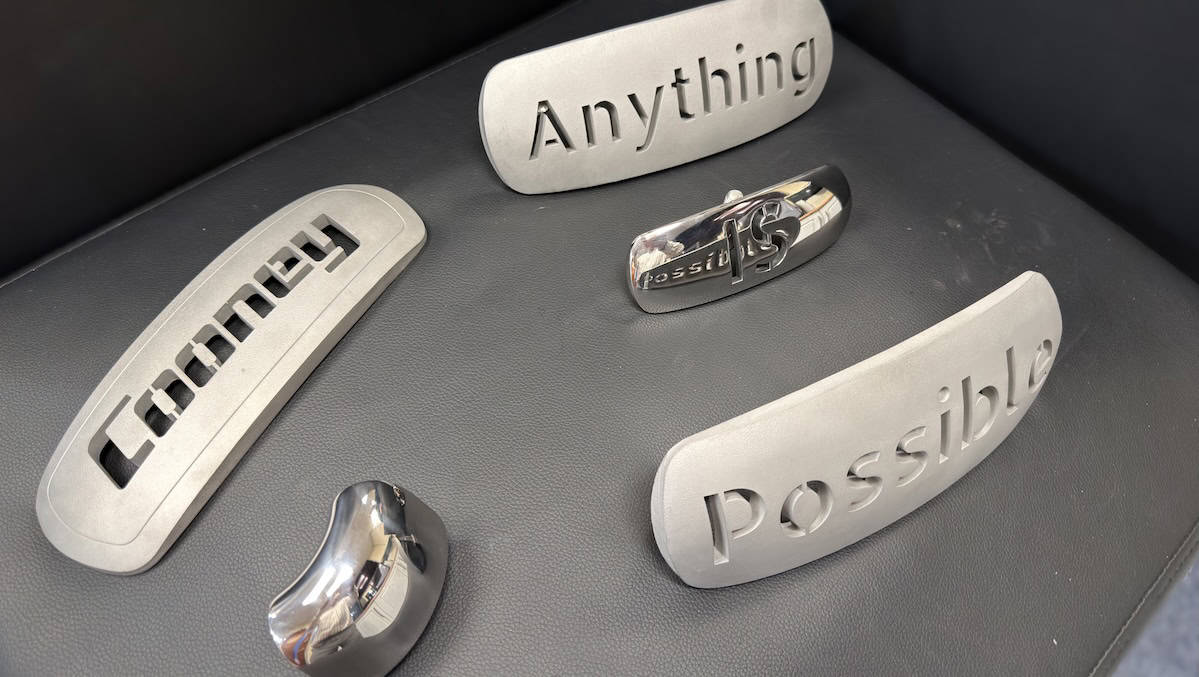
The UK’s Cooney Marine International, manufacturer of advanced marine equipment and manufacturing solutions, has launched a breakthrough in marine engineering – the commercial availability of parts made from 3D printed 316L stainless steel.
The development offers the maritime industry a combination of design freedom, accelerated supply chain logistics, and corrosion resistance.
The advance is poised to transform the way marine components are designed, produced, and maintained, explained Cooney Marine managing director James Cooney as it addresses critical industry needs such as reducing vessel downtime and overcoming global supply chain constraints for essential spare parts.
The future of marine manufacturing is here.
James Cooney
The potential of the technology was demonstrated at Metstrade where Cooney Marine unveiled a range of its new 3D printed 316L stainless steel parts.
“The response at METS was absolutely phenomenal — it was the most interest we have ever had at the show,” said James.
“The marine industry immediately grasped the value proposition: components that are not only lighter and structurally optimised but also available faster and featuring the inherent corrosion resistance of 316L. This confirms that the future of marine manufacturing is here.”
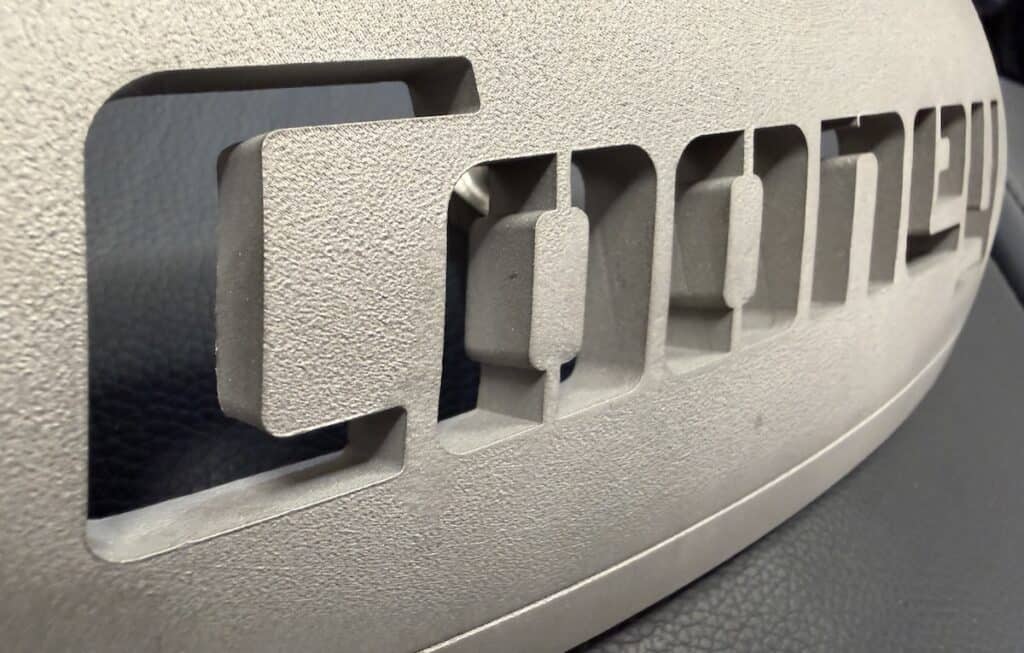
And James explained that the use of additive manufacturing with 316L stainless steel — an austenitic alloy highly valued for its molybdenum content which enhances its resistance to corrosion — delivers several significant benefits for ship owners, naval architects, and maintenance, repair, and overhaul (MRO) operations.
These include superior corrosion resistance as 3D printed 316L parts exhibit material properties, including high density, that ensure resistance to saltwater and acidic conditions.
Other features of the 3D printing include accelerated MRO and spare parts with critical components, tooling, and obsolete parts able to be manufactured on-demand which will cut lead times often associated with traditional casting or forging.
Lighter parts without sacrificing strength
In addition, additive manufacturing enables the creation of complex, topology-optimised geometries which James points out are impossible with conventional methods and which can lead to lighter parts without sacrificing strength.
The parts also deliver mechanical properties, including high tensile strength and ductility, making them suitable for demanding, high-performance applications such as pumps, valves, and engine components.
Cooney Marine International supplies deck hardware, stainless steel fabrications, and a range of advanced equipment solutions.