
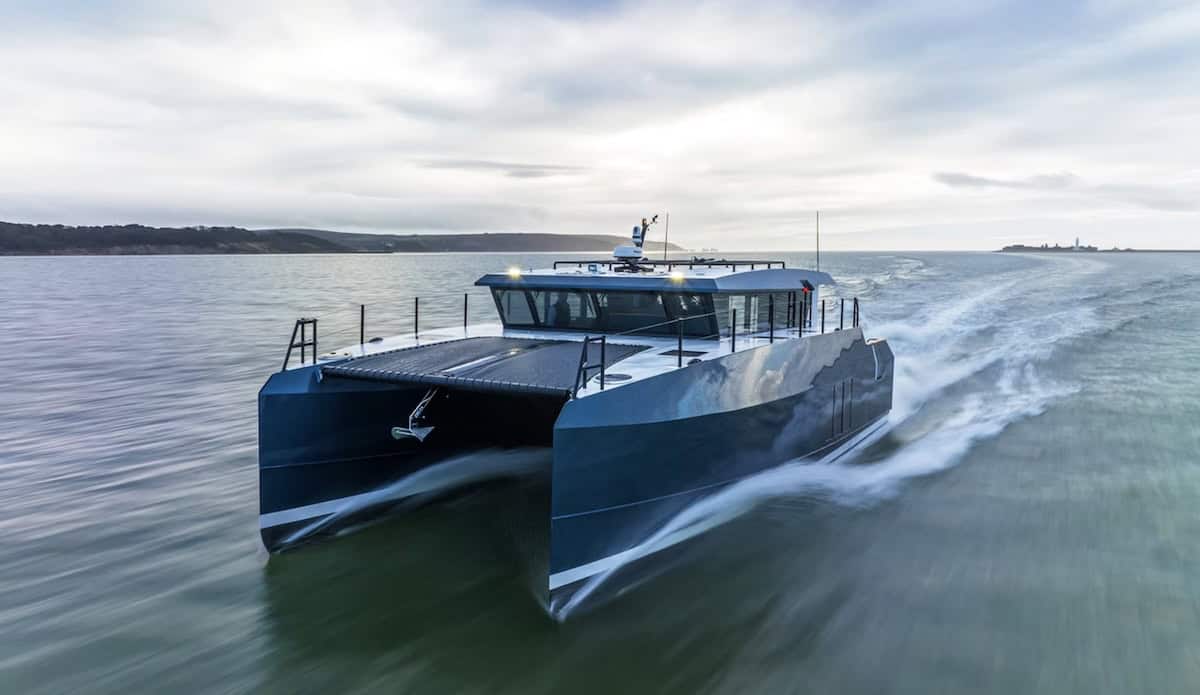
Archipelago Yachts and Chartwell Marine have successfully demonstrated a pioneering methanol-powered range extension system, converting methanol into hydrogen and then electricity using a fuel cell.
The companies believe the prototype system is capable of delivering approximately 12 times the effective energy density of today’s leading marine batteries, creating a practical range extender for electric vessels without the need for combustion engines.
The Methanol Pathfinder UK project was funded by Innovate UK, and supported through the UK Government’s Clean Maritime Demonstration Competition (CMDC6) and UK SHORE programme.
The project successfully integrated commercially available technologies into a fully operational prototype, including an E1 Marine methanol reformer, an Auriga Energy hydrogen fuel cell, a 100kW electric propulsion system and a 100kWh high-voltage battery installation.
Extensive testing
The complete system was housed within a specially modified 20-foot container, enabling the consortium to conduct extensive testing and collect performance data under representative operating conditions.
The project has advanced the system from concept stage to a fully integrated and tested prototype.
“The results exceeded our expectations and provide real-world validation of a technology that could fundamentally change how electric vessels are powered,” said Dr Stephen Weatherley, CEO of Archipelago Yachts.
“We have demonstrated that methanol can be converted into usable electrical energy with sufficient efficiency to make it a viable range-extending solution for vessels that would otherwise be constrained by battery capacity.
“Achieving an effective energy density 12 times greater than marine batteries is a significant milestone for the industry.”
Commercial interest
The project has now generated commercial interest, with investor discussions underway regarding the creation of a dedicated business to bring the technology to market.
The consortium has also identified a potential first customer interested in integrating the system into an all-electric Archipelago vessel.
Looking ahead, Archipelago Yachts and Chartwell Marine will explore the next phase of development, including a potential sea-going demonstrator vessel and further funding applications aimed at accelerating commercial deployment.
“One of the most important outcomes is that we’ve generated hard performance data rather than theoretical projections,” said Andy Page, managing director of Chartwell Marine.
“The technology has now been physically built, integrated and proven.”
And he added that the technology opens up significant opportunities across a range of sectors including leisure, commercial and offshore.