

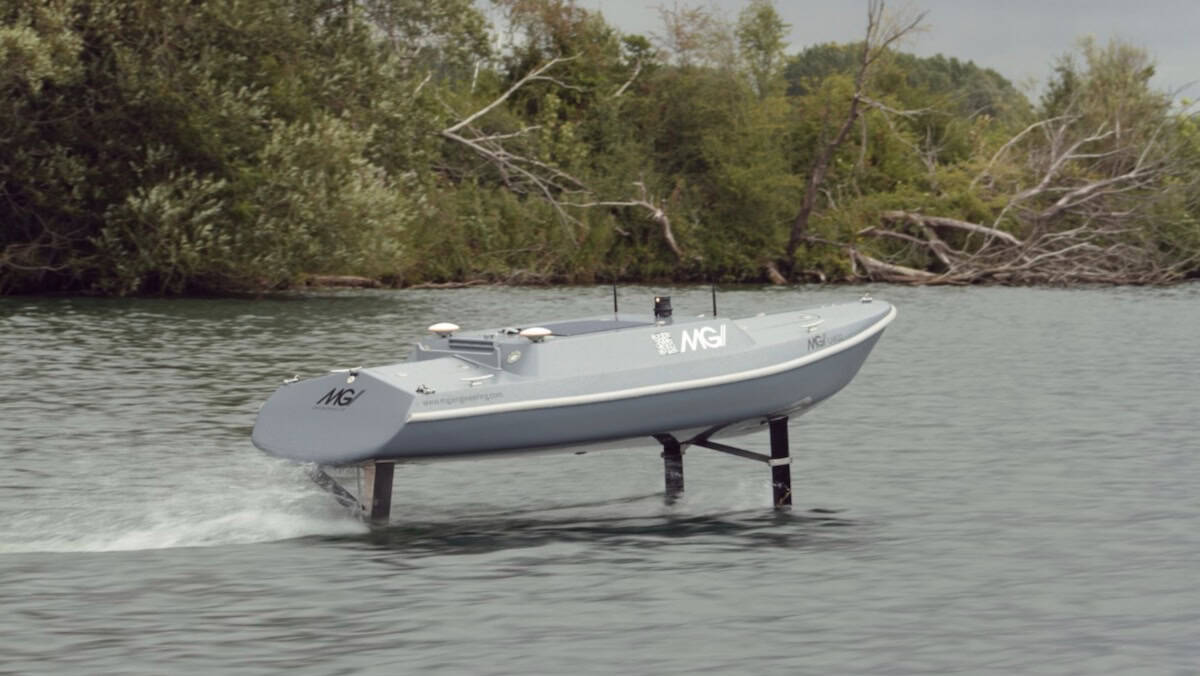
British engineering firm MGI Engineering has unveiled SeaGlide, an electric autonomous foiling vessel designed and manufactured using Formula 1-derived lightweight composites and control technology.
The uncrewed surface vessel (USV) is capable of carrying up to 200kg of cargo with a range of around 150km at a cruise speed of 25 knots and has been designed to cut the cost and carbon footprint of short-range maritime logistics.
A key feature of the system is its compatibility with MGI’s airborne Mosquito cargo unmanned aerial vehicle, which opens the way for delivery networks to bridge gaps between land, sea and air infrastructure.
“SeaGlide is a direct response to the commercial and environmental challenges in maritime logistics,” explained Mike Gascoyne, MGI’s chief executive officer.
We’ve created a platform that makes autonomous, zero-emission delivery commercially viable.
Mike Gascoyne
“By applying our F1 experience in lightweight composites and aerodynamic efficiency to the water, we’ve created a platform that makes autonomous, zero-emission delivery commercially viable.”
SeaGlide is powered using electric motors mounted within its fins, which allow the vessel to ‘fly’ on adjustable, self-stabilising, hydrofoils to reduce drag and boost range.
The foils encorporate draw on MGI’s Formula One technology, composites and control systems experience, providing performance and operation in a range of sea states.
Navigate and berth independently
SeaGlide’s beyond-visual-line-of-sight autonomy suite integrates AIS, radar and optical sensors with advanced collision-avoidance and precision-docking software, allowing the vessel to navigate and berth independently.
A hybrid-electric variant is currently in development to extend the range up to 500km.
SeaGlide is available in 4-metre, 5-metre and 6-metre variants and is currently undergoing sea trials.